
In a small company, especially one with a single shareholder, it is easy to blur the line between the company’s account and your personal one. But the company is a separate entity, and every euro that goes to the shareholder needs a proper basis.
Three routes, different rules
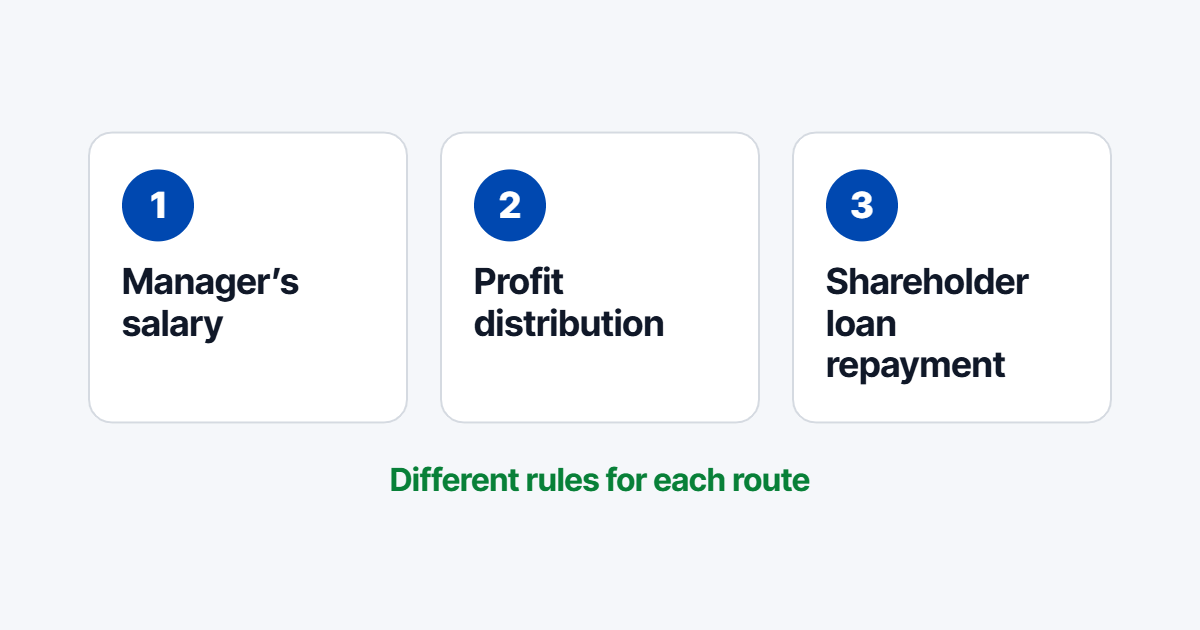
There are three usual ways for a shareholder to receive money from the company:
- a salary as manager, subject to personal income tax (IRS) and social security contributions, and an expense for the company;
- a distribution of profits, which depends on approved accounts and on there being profits available for distribution, and which is taxed in its own way;
- repayment of loans the shareholder has made to the company, which requires those loans to be properly documented.
Each route has different effects on the company’s tax, the shareholder’s income tax and their social protection.
The risk of withdrawals without a clear basis
Portugal’s Personal Income Tax Code presumes that amounts credited to a shareholder’s current account with the company, unless they arise from loans, work or holding a corporate office, are profits or advances on profits. In practice, transfers made “on account” may end up taxed as distributed profits.
An example: the sole shareholder of a company transfers a fixed amount to her personal account every month, with no salary processed and no decision on profits. At year end, those amounts have to be explained, and how they are explained changes the tax due.
Coming from another country?
Portuguese rules may differ from the ones you know. The shareholder’s tax residence and the way the company is organised also matter when choosing the best solution.
Setting the right mix at the start of the year, and reviewing it when the business changes, brings predictability to both shareholder and company.
Guiding these decisions throughout the year is part of our work with every client. Talk to us or book an exploratory meeting.
Sources: Portuguese Personal Income Tax Code (CIRS), art. 6(4) (Portal das Finanças); Social Security Contributory Code, art. 69 (members of corporate bodies); Commercial Companies Code, arts. 31 to 33.