
A sale only turns into cash when the customer pays. Until then, your company has already borne the cost of what it sold and keeps paying salaries, taxes and suppliers. That is why collection terms matter as much as sales volume.
Between invoice and payment
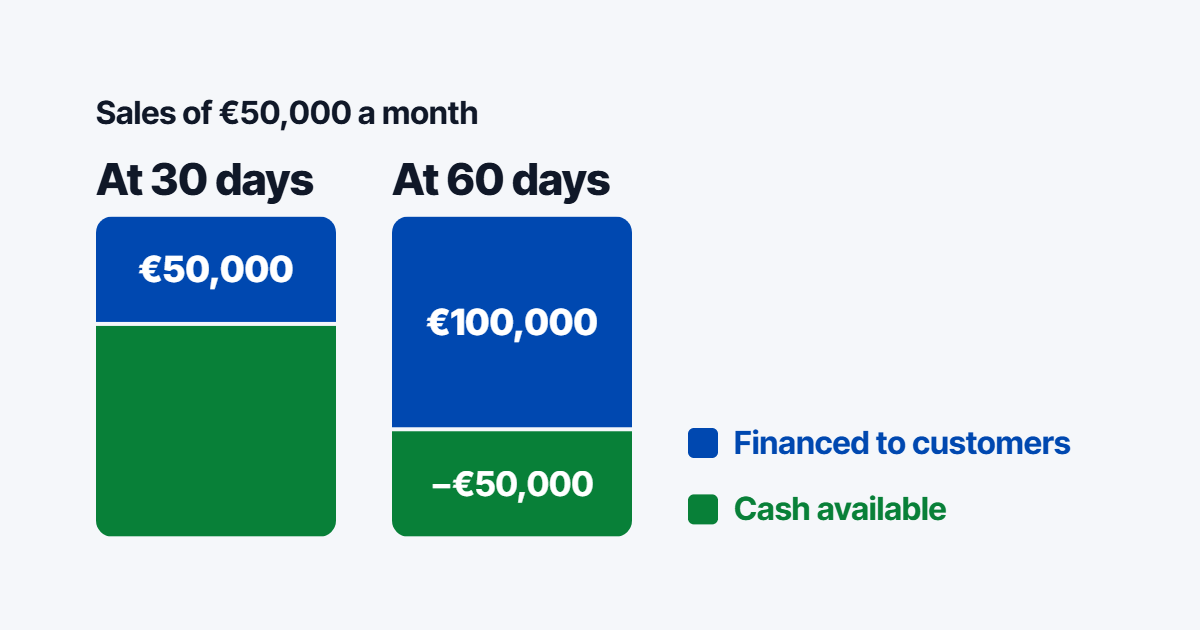
Every day between issuing an invoice and being paid is, in practice, credit your company gives the customer. With steady sales, being paid at 60 days instead of 30 means carrying, on average, one more month of sales still unpaid.
A simple example: a company that invoices €50,000 a month and is paid at 30 days has, on average, around €50,000 owed by customers. If customers start paying at 60 days, that figure rises to close to €100,000. That is €50,000 of the company’s cash financing its customers: money no longer available for salaries, taxes and suppliers, or that has to come from bank credit.
What the law says
In Portugal, in transactions between businesses where no term has been agreed, the law generally sets 30 days from receipt of the invoice. Terms longer than 60 days are only allowed under specific conditions. If payment is late, the creditor is entitled to late-payment interest and compensation for recovery costs.
Keeping track to decide
A few practices help shorten the gap between selling and getting paid:
- agree payment terms in writing before you sell;
- invoice as soon as the work is done;
- track the average collection period regularly, customer by customer;
- compare it with the time your company has to pay its suppliers.
When your company is paid later than it pays, the difference has to be financed. Knowing these figures lets you anticipate cash needs and negotiate in good time.
Guiding these decisions throughout the year is part of our work with every client. Talk to us or book an exploratory meeting.