
Adding a percentage to cost is a common way for small businesses to set prices. It is simple and practical, but the percentage added to cost is not the margin left on each sale. At the end of the year, when many companies prepare price lists and proposals for 2027, it is a good time to see why.
The same amount, two percentages
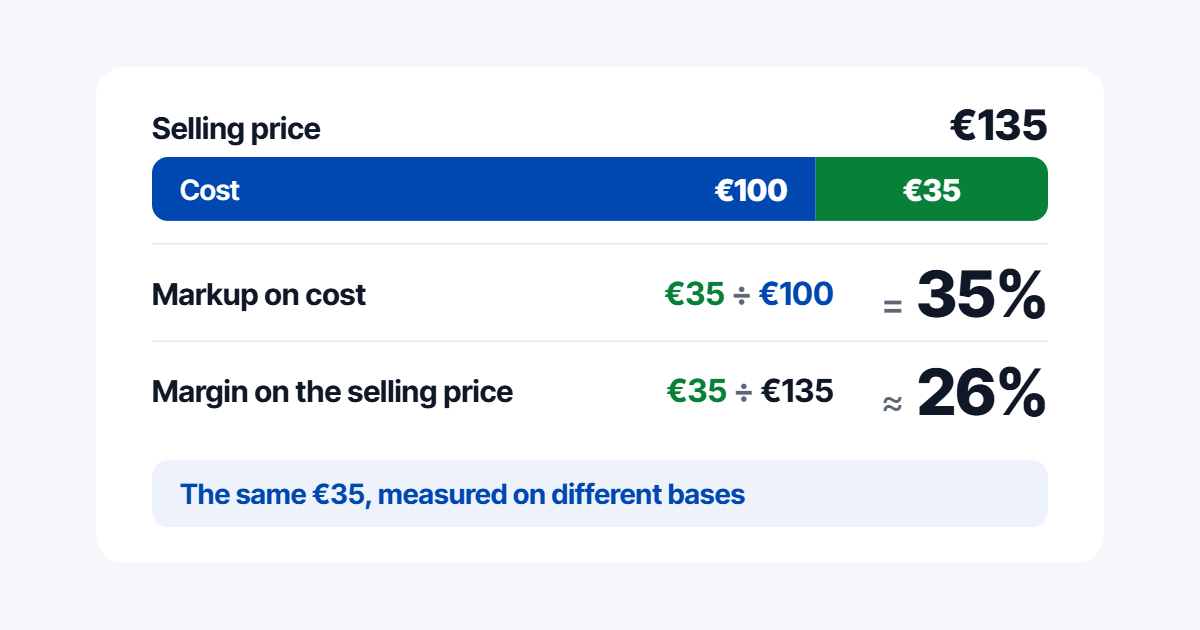
A simple example: a product costs €100 and sells for €135. The difference, €35, can be measured in two ways:
- on cost: €35 ÷ €100 = 35%. This is the markup;
- on the selling price: €35 ÷ €135 ≈ 26%. This is the margin.
Both percentages describe the same gain: a 35% markup equals a margin of around 26%. What is not the same is a 35% markup and a 35% margin. Because the price is always higher than the cost, the margin as a percentage is always lower than the markup.
To actually earn a 35% margin, the price would need to be around €154 (€100 ÷ 0.65), which means a markup of around 54% on cost.
The effect of discounts and commissions
Discounts and commissions are usually calculated on the selling price and come straight out of the margin. In the same example, a 10% discount lowers the price to €121.50 and the €35 difference to €21.50. In other words, a 10% discount takes up more than a third of the margin.
Which costs count
A margin is only reliable if the cost is complete. Besides the purchase price, the cost should include transport, packaging or, for services, hours of work, plus a share of fixed costs such as rent and salaries. These costs change from year to year: in Portugal, the minimum wage is expected to rise from €920 to €970 in 2027.
Knowing the real margin on each product, service or customer, based on your accounting figures, helps you decide where to adjust prices, which discounts make sense and which sales contribute most to the result.
Guiding these decisions throughout the year is part of our work with every client. Talk to us or book an exploratory meeting.
Sources: Report accompanying Draft Law no. 110/XVII/2 (2027 State Budget); Tripartite Agreement on Wage Appreciation and Economic Growth 2025-2028.