
Many self-employed professionals and sole traders in Portugal are taxed under the simplified regime for personal income tax (IRS). It is practical, as it does not require full accounting, but it still calls for attention to expenses. The end of the year is a good time to look at them.
How the simplified regime works
Under this regime, tax does not apply to everything the business earns. The law applies coefficients to income: for the professional activities listed in the IRS Code, for example, only 75% of income is taken into account; for other services, 35%. The part left out works as a presumption of expenses.
The 15% that must be justified
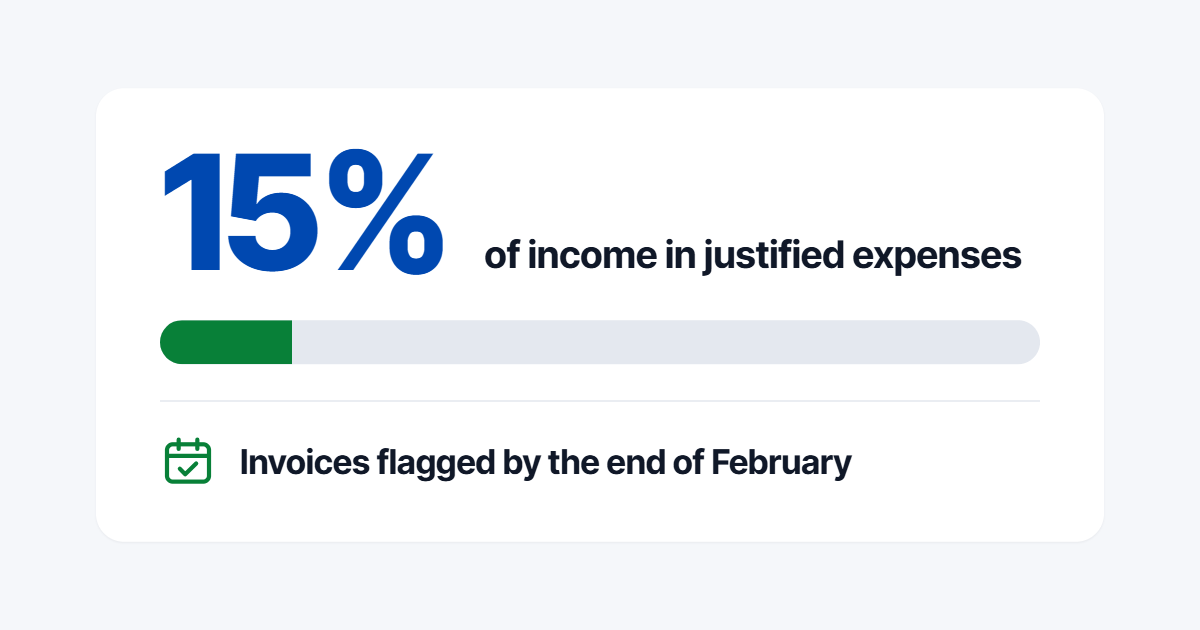
For services, this presumption is not automatic. Expenses equal to 15% of gross income must be justified. Items that count include, among others, the specific deduction or social security contributions, rent on property used in the business, and invoices for business goods and services reported to the Tax Authority. If the total falls short of 15%, the difference is added to taxable income.
Business invoices should be identified on the Tax Portal (Portal das Finanças) by the end of February of the following year. Expenses only partly linked to the business count only in part.
A simple example: a consultant with €45,000 of annual income must justify €6,750. Part of this is covered by the specific deduction; the rest depends on the invoices identified. Whatever is not justified is taxed.
When a change makes sense
The simplified regime applies up to €200,000 of annual income. Even below that amount, it is possible to opt for full accounting (contabilidade organizada), which taxes the business’s actual result. The option has its own deadlines and depends on each activity’s cost level, so it is worth assessing in good time.
Guiding these decisions throughout the year is part of our work with every client. Talk to us or book an exploratory meeting.
Sources: Portuguese Personal Income Tax Code (CIRS), arts. 28 and 31 (Portal das Finanças).