
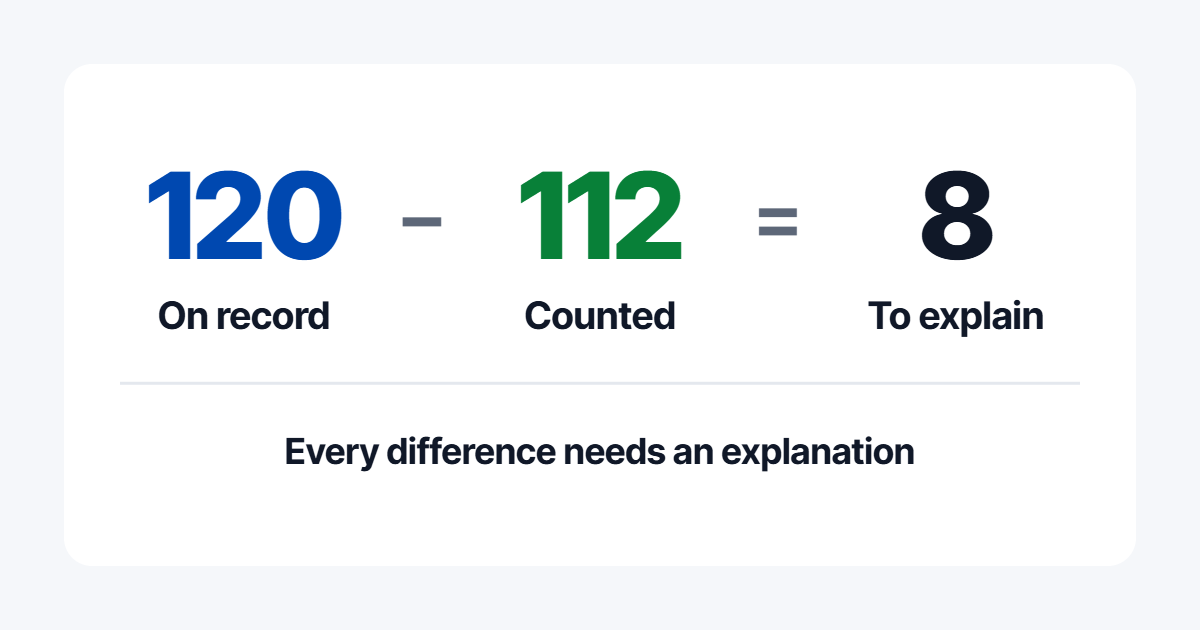
At the end of the year, many companies count what they hold in the warehouse, the shop or the office. Stock held on 31 December, such as goods, raw materials or products, is reported to the Portuguese Tax Authority (AT) by 31 January by companies with full accounts (contabilidade organizada) that must keep an inventory. But the year-end count is only the last step. What makes it reliable is control throughout the year.
Why control matters
The value of stock feeds directly into the cost of sales and, therefore, into the company’s result. If the records do not match what is actually there, margins and profit are distorted too.
There is also a tax effect: unless proven otherwise, Portuguese VAT law presumes that goods acquired and no longer found at any of the company’s business premises have been sold. Missing goods with no explanation can therefore lead to tax being due.
What should be in place
Many companies are required to keep a permanent inventory system, with exceptions such as micro-entities. Even where it is not required, a few practices make a difference:
- record all goods in and out: purchases, sales, consumption and returns;
- count items at year end or on a rolling basis, so that each one is counted at least once a year;
- explain and document differences, such as breakage, theft, or damaged or expired items;
- keep apart goods on your premises that do not belong to the company, and record company goods held elsewhere.
A simple example
A home decor shop with around 300 product lines counts one section a month. In September, the count shows fewer glass pieces than the records: some broke in transit and this had not been recorded. Corrected and documented at that point, the difference no longer shows up in December, and the shop realises it needs to review how it packs those pieces.
Well-controlled stock also shows what sells, what is not moving and how much money is tied up in stock. That is useful information for decisions on purchasing, pricing and promotions.
Guiding these decisions throughout the year is part of our work with every client. Talk to us or book an exploratory meeting.
Sources: Decree-Law no. 198/2012 of 24 August, art. 3-A; Decree-Law no. 158/2009 of 13 July, art. 12; Portuguese VAT Code (CIVA), art. 86; Portuguese Order of Certified Accountants (OCC), “Inventário permanente”.